What ChatGPT is NOT - Tech Raven Blog There is a lot of excitement about ChatGPT and how it allows us to interact with information and technology. I am actually excited that it now exists and still, I think it is being way overhyped. I... Tech Raven Blog - · blog.techravenconsulting.com Do you remember regression models from college: given some data, you find a best fit line that allows you to predict Y given X. At the end of the day, ChatGPT, and LLMs in general, are the same thing as the regression model – it’s just that ChatGPT is the largest and fanciest model we currently have to model language and information. I really am coming to the idea of calling it a “word calculator”, this seems to be the most succinct description of llms that the lay person can comprehend and relate to. ChatGPT does not hallucinate or become unhinged I think Steve goes much deeper on this in his intervew on fafo.fm. They describe it more as a pleaser or “yes man” essentially all the companies that are building these models want to give the “best” answer, better than their competitors. With this comes the risk of it being completely wrong, they are designed to always give an answer. On that episode the…
Published
All published posts
2717 posts
latest post 2026-11-11
Publishing rhythm
“I’d rather read the prompt” Clayton Ramsey grades student assignments and gets papers that are just obviously ChatGPT output. I think any of us can spot it by now: awkward repetitive prose, heavy on bullet points with bold in… Chris Coyier · chriscoyier.net I’ll triple down on the link-blog chain here, see this one going around all over this week and finally had time to read through when it hit my rss reader via Chris. It should come as no surprise that nearly every vibe-coded app on the Internet struggles with security issues; look no further than the vibe-coded recipe app that leaks its OpenAI keys. Every time one generates code by prompt, they create a new stillborn program; vibe coding is the art of stitching together their corpses into Frankenstein’s monster. Damn, that is a strong statement, stitching together the corpses, strong statement here. The OpenAI key thing feels kind of obvious to me, every set of docs, blogs and examples on the internet need to be runnable for people to learn and try out new tech easy, putting secrets in the wrong place is easy, putting them somewhere that you can decode them without sharing them is hard team specific, app specific, and so nuanced…
Under 2000 everything is happy, green field. Any decision you have made is relatively easy to back out of (barring you making a library with downstream users), but as you go, regret kicks in. Regret we didn’t make that pydantic 2 upgrade earlier, as new features become more apealing. Regret that we chose sqlite for simplicity, speed, agility, and now we might need robust and distributed. Regret that you chose a front end framework, or to have a front end at all to a backend problem. Regret that you put 6 layers of abstraction on your db early on and now that you understand the problem you want different abstractions, but all of your endpoints deeply depend on the current one. Vibe coding will not save you, it will only make these wrong decisions for you without the context that you have. You will hate it’s decisions more because you had no input into some of them.
“Gradually roll out your releases to a small group of people” ~ roughly what prime said (I’m listening live) This really hit home with me, tests can be so good at making sure that we dont repeat bugs and that laser focused things work, tests are generally small and focused, but this does not replace some sort of integration testing. These days very few things are written as a monolith, and hence there are a lot of interactions that really need to play well together accross various systems. They call out Crowdstrike here, which took down the world blue screening critical windows systems everywhere in 2024. It was revealed that a small changed was rushed through and skipped critical rollout paths since it seemed like a small change. Crowdstrike also runs at a super low kernel level of access and a small memory bug can kill the system.
External Link waylonwalker.com I’m trying to level up my sre game. I’m trying to set up grafana dashboards for everything and it is such a wide surface area. It’s never just one thing you have to have 3 or more things hooked together in order for the data to flow. I’m really getting not invented here vibes, and thoughts that I can just build this myself. Not grafana and it’s scalability necessarily, but small components of observability.
Kubernetes Monitoring Helm tutorial | Grafana Loki documentation Grafana Labs · grafana.com This is a really great guide to setting up kubernetes monitoring with helm, it uses loki as a log datasource and alloy as a collector of kubernetes logs, events, and nodes. The charts are setup really well to start collecting logs from all your kubernetes pods.
Configure the Tempo data source | Grafana documentation Grafana Labs · grafana.com Really helpful article to getting tempo datasource setup in grafana, this enables you to see span and trace data within grafana. This data helps debug and work through issues that you might come into with performance and need to see the timing of requests along with logs.
I’m trying to learn proper logs, monitoring, otel, and grafana. Today I imported a bunch of pre-made k8s dashboards and made a few of my own for specific apps, and it made me want to know how I can turn my own custom dashboards into infrastructure as code. Turns out grafana makes it pretty easy to do this, if you have the grafana dashboard sidecar running. It will pick up any ConfigMap with the grafana_dashboard label and import it.
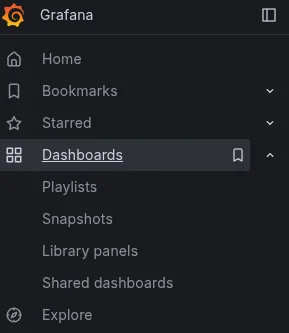
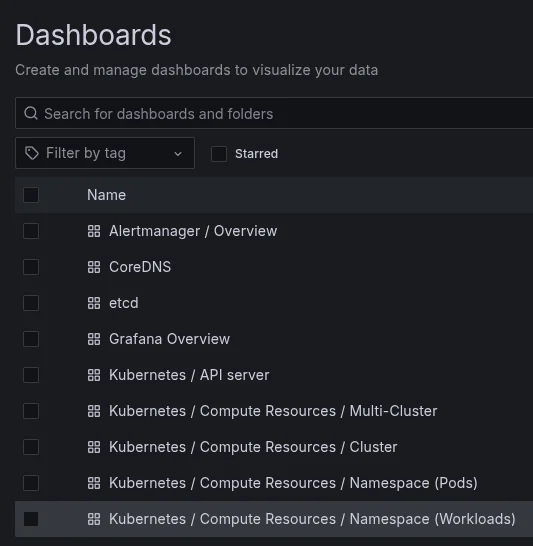
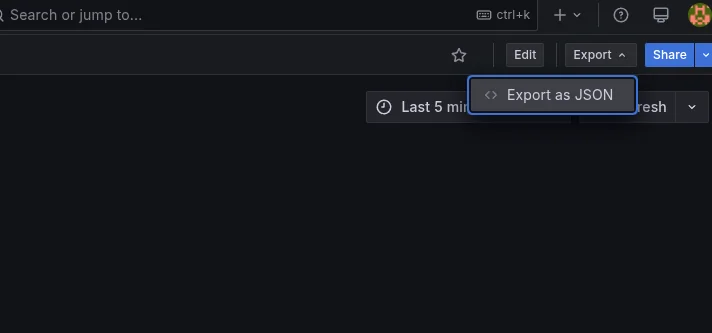
Go to Dashboards -> Pick a Dashboard -> Export -> JSON.
apiVersion: v1
kind: ConfigMap
metadata:
  name: my-dashboard
  namespace: meta
  labels:
    grafana_dashboard: "1"
data:
  my-dashboard.json: |
    {
      "annotations": {
        "list": [
      ...
      "uid": "fel2uhjhepg5ce",
      "version": 3
    }
Just starred postiz-app by gitroomhq. It’s an exciting project with a lot to offer. 📨 The ultimate social media scheduling tool, with a bunch of AI 🤖
hollow knight home row layout
I just made it past 100% in my main hollow knight run, so now I will allow myself to get silksong when it comes out. I did this with a little bit of YT guidance, but mostly just figuring it out. I only just discovered the ⭐ ReznoRMichael hollow-knight-completion-check which got me an extra 2% for a few items I must have got and not saved on, because I was sure I had them. Controller Hollow Knight is a game that can be played with keyboard or controller, You can use analog stick for movements, but they just translate to dpad, there really are no analog moves in the game. This makes it ripe for playing on pure keyboard. I really favor controller when there are more than one analog (throttle, brake, steering for example). On controller I’ve switched to only using d-pad as I feel like it gives me the most crisp of controls. It is really easy to miss a pogo on analog by hitting slightly left or right. My Keyboard My daily driver keyboard is a custom built 40% monoblock keyboard I absolutely…
I recently discovered wezterm by wezterm, and it’s truly impressive. A GPU-accelerated cross-platform terminal emulator and multiplexer written by @wez and implemented in Rust
External Link fafo.fm Steve is such a great listen, the neurospicy 🌶️ rambles this episode goes on is so relatable. I feel like I really missed out on some great takes on intellij vs neovim, but got some really great knowledge about vector db’s, embedding, text compression, similarities to vector algegra like infinite craft. Just popped open infinitecraft and I’ve definitely played this with my kids before, super fun, just could not remember the name of this one. I do remember an android one as well that is alchemist or something like that, which we have also played a lot.
Recovering from Disaster with Seth Eliot Disaster recovery is more than automation and infrastructure. There's a lot that goes into your services and some of those things can't be defined as code or automa… Fork Around And Find Out · fafo.fm This episode really got me thinking about the difference between HA and DR and my approach to each one. They talk about it from the perspective of a cach cow kind of app rather than a homelab or internal tooling, but think of HA as 9’s how many 9s are we willing to pay for, tink of DR as dollars how many dollars will we loose during the period of recovery. So much more in the episode, a lot of talk around cloud vendors and what they give you vs a purpose build platform with HA and DR in mind.
Just starred kubero by kubero-dev. It’s an exciting project with a lot to offer. A free and self-hosted PaaS alternative to Heroku / Netlify / Coolify / Vercel / Dokku / Portainer running on Kubernetes
I’ve been using ruff to lint my python code for quite awhile now, I was pretty early to jump on it after release. Some of my projects have had a nice force-single-line setting and some have not. I dug into the docs and it was not clear what I needed to make it work.
[tool.ruff]
select = ['I'] # you probably want others as well

[tool.ruff.isort]
force-single-line = true
Turns out I was missing Isort in the select list.
Astral is doing great things in the python industry. They are disrupting entire categories of tools with extremely fast, easy to use, and feature rich alternatives that make it really hard to keep using the incumbent. So far I am seeing no signs of evil, sometimes with such a disrupter there is some sort of downside that make it hard to want to do the switch. In the interview they even mention things like leaning on lsp so that it works across all editors rather than building out vscode integrations that work for most developers. As a neovim user I greatly apreciate this.
Playground | ty An in-browser playground for ty, an extremely fast Python type-checker written in Rust. types.ruff.rs ty, has a playground running at types.ruff.rs. You can edit code in there and see what the type checker results would be in browser. This looks good, excited to see it running in my lsp. Here is an example where a Optional may not be defined. Checking for existance before using it resolves the issue.
ty An extremely fast Python type checker, written in Rust. PyPI · pypi.org Astral is working on some great things around python, they have created a high standard for python tooling built on rust that works really well, runs fast and covers everything in the space it resides in. ty appears to be their linter coming soon.
I was looking back at my analytics page today and wondered what were my posts about back at the beginning. My blog is managed by markata so I looked at a few ways you could pull those posts up. Turns out it’s pretty simple to do, use the markata map with a filter.
from markata import Markata

m.map('title, slug, date', filter='date.year==2016', sort='date')
Note
the filter is python eval that should evaluate to a boolean, all of the attributes of the post are available to filter on.
Result #
[
    ('⭐ jupyterlab jupyterlab', 'jupyterlab-jupyterlab', datetime.date(2016, 12, 13)),
    ('⭐ nickhould tidy-data-python', 'nickhould-tidy-data-python', datetime.date(2016, 12, 9)),
    (
        '⭐ mikeckennedy write-pythonic-code-demos',
        'mikeckennedy-write-pythonic-code-demos',
        datetime.date(2016, 11, 22)
    ),
    (
        '⭐ mikeckennedy write-pythonic-code-for-better-data-science-webcast',
        'mikeckennedy-write-pythonic-code-for-better-data-science-webcast',
        datetime.date(2016, 11, 22)
    ),
    ('⭐ rajshah4 dlgroup', 'rajshah4-dlgroup', datetime.date(2016, 11, 18)),
    ('⭐ pandas-dev pandas', 'pandas-dev-pandas', datetime.date(2016, 10, 5))
]
You could use the list command as well right within your shell and the same
map and filters work.
⬢ [devtainer-0.1.3] ❯ markata list --map title --filter='date.year==2016'
[22:35:06] 2088/2145 posts skipped                                                                       skip.py:36
           57/2145 posts not skipped                                                                     skip.py:37

⭐ pandas-dev pandas
⭐ rajshah4 dlgroup
⭐ mikeckennedy write-pythonic-code-for-better-data-science-webcast
⭐ mikeckennedy write-pythonic-code-demos
⭐ nickhould tidy-data-python
⭐ jupyterlab jupyterlab
You could also do it with jin right inside of a markdown post using the jinja_md plugin.
{% for post in core.Filter("published==true and date!=nil") %}
{% if post.Date.Year() == 2016 %}
* [{{ post.Title }}]({{ post.Href }}) - {{ post.Date.Format("2006-01-02") }}
{% endif %}
{% endfor %}
Note
You do have to jinja: true in the frontmatter of the post.
Result #
The snippet lists each published post dated 2016. I keep those posts in the [[ archive ]].
3D Printable Power Brick Bracket Designer Generate custom 3D printable power brick brackets for your devices. Design and export your own mounting solutions. Bracket Engineer · bracket.engineer This is madness that Wes Bos made this with manifold.js and no openscad! Yes, I have these stupid brackets everywhere, yes, I hand model my own brackets. No I don’t do it enough. I don’t like that these model generators like openscad cannot make fillets and chamfers, but I appreciate the heck out of the speed and automation you can make iterations of things. Link to the promo video. https://bsky.app/profile/wesbos.com/post/3lo4h7unk6s2i
Calendar data could not load. Try again.