2025-08-25 Notes
Gave modd a try and it seems pretty good, will likely be slotting it in next to my justfile usage.
All published posts
Gave modd a try and it seems pretty good, will likely be slotting it in next to my justfile usage.
# The Death of the User Interface > **TL;DR:** We're witnessing the end of graphical user interfaces. AI agents like Claude Code are eliminating the need for windows, menus, and clicks, replacing them with natural language. The computer is finally learning to speak human, not the other way around. --- ## ๐ฎ A Personal Revelation Last week, I realized something profound: **I haven't opened Finder in months.** Not once. Where I once clicked through nested folders, dragged and dropped files, and navigated hierarchical menus, I now simply tell Claude Code exactly what I need: - _"Find all the test files modified in the last week"_ - _"Move the old backups to archive"_ The commands execute instantly, precisely, without me ever seeing a window, icon, or folder. > This isn't just about convenience. It's a fundamental shift in how humans interact with computers, and it signals the beginning of the end for user interfaces as we know them. --- ## ๐ด โ ๐ The Bicycle That Became a Teleporter In 1990, Steve Jobs famously described computers as "bicycles for the mind," drawing from a Scientific American study showing that humans on bicycles were the most efficient locomotors on Earth. The metaphor was perfect for its time: computers amplified human cognitive abilities just as bicycles amplified our physical capabilities. But bicycles still require you to: - **Pedal** the mechanism - **Steer** the direction - **Navigate** the terrain - **Learn** the balance Traditional user interfaces work the same way. They're tools that amplify our abilities, but only after we learn their language, their layouts, their logic. > **What we have now with AI agents isn't a bicycle anymore. It's a teleporter.** You simply state your destination, and you arrive. --- ## ๐ From Xerox PARC to Natural Language: A 50-Year Arc ### The Timeline of Interface Evolution **1964** โ Douglas Engelbart invents the computer mouse at Stanford Research Institute **1973** โ Xerox PARC develops the Alto, the first computer with a GUI **1979** โ Steve Jobs sees the Alto, immediately grasps its revolutionary potential **1984** โ Macintosh launches, bringing GUI to the masses **2024** โ AI agents begin replacing graphical interfaces entirely That language dominated for five decades. Windows, Mac OS, and even modern web applications all speak variations of it: _point, click, drag, drop, menu, submenu, dialog box, button._ We became so fluent in this language that we forgot it was a language at all. ### The Abstraction Layer Pattern Every abstraction layer in computing eventually gets replaced by a higher-level one: | **Era** | **From** | **To** | | ------- | ------------------- | ---------------------------------- | | 1950s | Machine code | โ Assembly language | | 1960s | Assembly | โ High-level programming languages | | 1980s | Command line | โ Graphical user interfaces | | 2000s | Native apps | โ Web applications | | 2020s | **User interfaces** | **โ Conversational AI agents** | > Each transition follows the same pattern: what once required specialized knowledge becomes accessible through more natural, intuitive interaction. --- ## ๐ป The Invisible Operating System Traditional operating systems: Windows, macOS, Linux, are abstractions over hardware. Web applications are abstractions over REST APIs. Both require user interfaces because they need to translate between human intent and machine execution. **AI agents represent something fundamentally different:** they're abstractions that understand human intent directly. No translation required. ### Consider the Mental Journey of a Simple Task ๐ฑ๏ธ Traditional UI Approach 1. Open Finder/Explorer _(remember where it is)_ 2. Navigate to directory _(remember the path)_ 3. Scan through files _(parse visual information)_ 4. Select multiple files _(remember shortcuts)_ 5. Right-click for menu _(know this exists)_ 6. Choose "Move to..." _(understand terminology)_ 7. Navigate to destination _(remember another path)_ 8. Confirm operation _(hope you got it right)_ ๐ฃ๏ธ AI Agent Approach 1. "Move all PDF files from Downloads to Documents/Reports" **Done.** > The difference isn't just efficiency, it's cognitive load. With traditional interfaces, you're translating your intent into the computer's language. With AI agents, the computer learns your language instead. --- ## ๐ง The Mental Load Revolution Every interface element, every button, menu, icon, and widget, is a **tiny cognitive tax**. Even the most intuitive interface requires you to: - โ Understand its visual language - โ Remember its organizational structure - โ Learn its interaction patterns - โ Maintain mental models of its state This is what UX designers call **"extraneous cognitive load"**. Mental effort spent on using the tool rather than accomplishing the task. > When you tell Claude Code to "set up a new Python project with pytest and black pre-configured," you're expressing pure intent. The mental energy you would have spent on navigation can be redirected to actual problem-solving. --- ## โก The Present: Early Adopters and Edge Cases We're living through the transition right now. ### What's Happening in 2024 - **AIOS** โ Embedding LLMs directly into operating systems - **Claude Code** โ Replacing entire categories of developer tools - **Cursor & Copilot** โ Making IDEs conversational - **Warp Agent Mode** โ LLMs in the terminal for multi-step workflows ### What I No Longer Do I see it in my own work every day. I no longer: โ Browse through file explorers โ Click through git GUIs โ Navigate package manager interfaces โ Hunt through documentation sites โ Configure tools through preference panes Instead, I describe what I want, and it happens. **The interface hasn't been simplified, it's been eliminated.** --- ## ๐ The Future Steve Jobs Glimpsed > "Ultimately computers are going to be a tool for communication. Not computation, not productivity. Communication." > > โ Steve Jobs, 1983 International Design Conference At that conference in Aspen, a 28-year-old Jobs made predictions that seemed like science fiction: - Portable computers with wireless connections - Instant access to remote databases - Devices as primary means of communication He was right about all of it, but even his vision was constrained by the paradigm of his time. He imagined better interfaces, more intuitive interactions, simpler designs. **He couldn't imagine no interface at all.** Yet in that quote above, Jobs understood something fundamental: the real revolution would come when computers could understand us as naturally as we understand each other. > That future is arriving. The question isn't whether AI will replace user interfaces, but how quickly and how completely. --- ## ๐ The Last Interface There's an irony in writing about the death of user interfaces, or rather, there **was**. This article itself is proof of the transition: generated through conversation with Claude Code, shaped by human intent rather than human interface manipulation. I provided the ideas and direction; the AI handled the execution. **The future isn't coming, it's already here, manifesting through the very words you're reading.** Soon, articles like this won't be "written" in the traditional sense. They'll be conversed into existence, with AI agents handling not just the typing but the research, fact-checking, formatting, and publishing. The tool will disappear into the task. ### The Holdouts and the Inevitable Some will mourn this loss. There's something satisfying about direct manipulation, about seeing and controlling every step. Just as some still prefer command lines to GUIs, some will always prefer clicking to conversing. But for most of us, the appeal of **zero cognitive load** will be irresistible. > Why learn an interface when you can just say what you want? > Why navigate when you can simply arrive? --- ## ๐ฏ Conclusion: After the Interface We stand at an inflection point. For fifty years, ever since Xerox PARC invented the GUI, we've been refining the same basic paradigm: **humans learning to speak computer**. Now, **computers are learning to speak human**. The death of the user interface doesn't mean the death of design or user experience. If anything, it makes them more important. When the interface disappears, what remains is pure interaction design: understanding human intent, anticipating needs, handling edge cases gracefully. The challenge shifts from: - โ _"How do we make this button more obvious?"_ - โ
**"How do we understand what the user really wants?"** > Steve Jobs gave us bicycles for the mind. > AI agents are giving us something else entirely: **minds that understand our minds.** > No pedaling required. **The user interface is dying, and that's the most user-friendly thing that could possibly happen.** --- _What do you think? Are we witnessing the end of user interfaces, or just another evolution? How has AI changed your own relationship with traditional software interfaces?_
This is an insane level of agentic llm use, the author claims to not even use his filesystem anymore, its too cumbersome to find where downloads and documents are and way too easy to ask an agent to move all pdfโs from downloads to documents.
...
Damn, social media is at an all time low. Iโve felt all of these issues and when I got a new phone I started fresh, I didnโt install one social media app. Luckily Youtube has remained solid for me. Yes shorts are a bit less what I came for and more addicting content they had to do in order to keep up. There are some legit good commedians, a bit of good knowledge and a bunch of trash that is hard to look away from on shorts. I still find myself able to find content I enjoy and signed up for on YouTube. I feel like I get a one way relationship with someone similar to a TV show or news anchor of old media.
Social Media has morphed from follows likes and similar, to viral posts by creators I donโt recognize. posting and immediately getting like by two hot women with accounts created this week. The rest of the real creators left on there are stuck trying to keep up, echo viral trends, trying to keep up the content treadmill. A few come through, but most feel somewhat forced. A lot of it is ai generated, and whats not mostly doesnโt feel that human anyways.
The people on here seem to really tie the internet to social media and are ready to quit the...
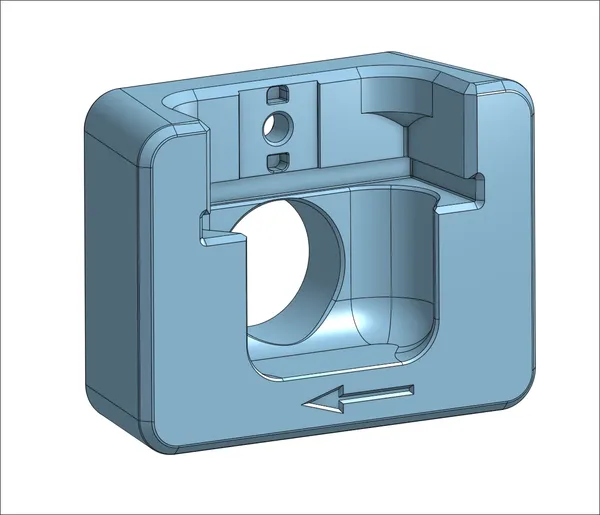
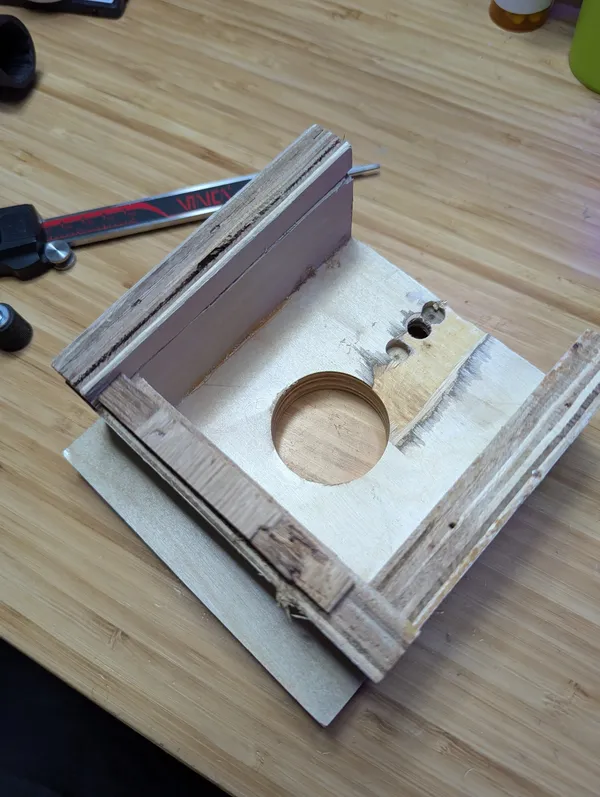
Today, some great work on the knife sharpener re-design. I've been using the same one since I first got my ender 3 3d printer, and have wanted to make some...
Today I needed to make a backup of some config. I wanted to add a timestamp so that I knew when the backup was made. This would make unique backups easy, and I could tell when they were made.
cp configfile configfile.backup.$(date %s)
If you want to decrypt the timestamp into something more human readable. You can list backup files, strip out the timestamp, and then convert it to a human readable date.
/bin/ls | grep backup | sed 's/configfile.backup.//' | xargs -I {} date -d @{}
or just throw it to the date command by hand.
https://youtu.be/-EYRzF0zp3U?si=mKCPlMDecrqzvjuF
Not algorithmic recommendations. Not SEO-optimized listicles.
I mean real, surprising, meaningful discovery.
Search is brokโฆ
The hype bro influencer culture is over, we are fucking burnt the fuck out. Iโm done scrolling through ai slop on social media, I like in a few times a week with hopes to see some friends at the top of my feed and jump out. The Doom and Gloom of politics, everyone has a side that will bring glory and the other side will start an apocalypse did me in, ai generated bs is just driving those platforms further into the ground, Iโm tired and done.
...
"Business in the front, party in the back" isn't just some throwback style. It's the whole point.
In ouโฆ
We need more mullets (as sam describes them). Not so serious, but serious when it counts. Ready to back you up, get some shit shipped, roll up their sleeves and do the work, stand up in front of people and pitch ideas. We have too many hustle bros pitching shit they cant do, ai doomers who have been here 10 minutes think they can replace everything they donโt understand with a word calculator, framework Andys afraid to ship till its perfect. Grow a Mullet.
...
The most under hyped, under engineered text editor overtype. Going to be popping this into some places like Thoughts, and maybe more, looks small and easy to use. Gives just a bit of nice features over a text editor.
The work on overtype by panphora.
The markdown editor thatโs just a textarea https://overtype.dev